
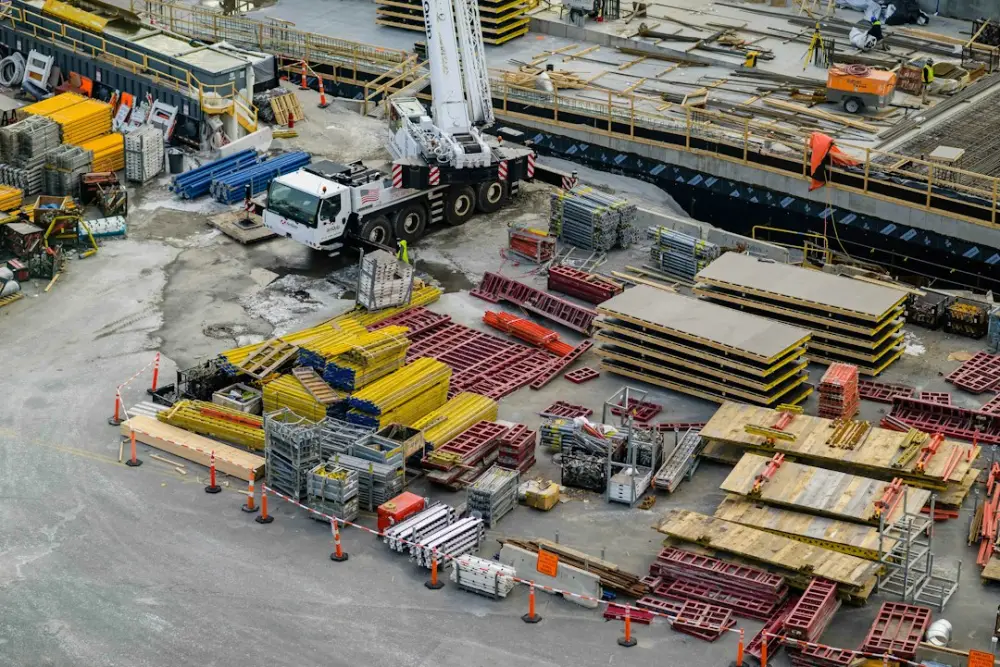
Construction material reuse is the practice of salvaging components from a building during renovation or demolition and reintegrating them into the same or a new project without significant reprocessing. Unlike recycling, which breaks materials down into raw elements, reuse preserves the item's original form and structural integrity, significantly reducing the demand for virgin resources.
In 2026, on-site reuse often begins with a rigorous pre-demolition audit. By identifying high-value items like structural steel beams, hardwood flooring, or intact masonry early, contractors can plan for careful extraction. This approach minimizes transport costs and carbon emissions because materials never leave the site boundary, directly supporting localized circular economy goals.
Defining construction material reuse
The core of material reuse lies in maintaining the utility of a product. When we talk about reuse on a construction site, we are looking at items that can perform their original function again or be adapted for a new one with minimal intervention. For example, a heavy timber joist removed from a warehouse floor might be cleaned and used as a lintel in a residential renovation. This differs from recycling, where that same timber would be shredded into particleboard or burned for biomass energy.
On-site reuse is the most efficient tier of the waste hierarchy. By keeping materials within the project perimeter, developers avoid the logistics of hauling waste to a facility and the subsequent cost of buying and transporting new replacements. A practical example of this is the cleaning and stacking of clay bricks during a facade renovation. Instead of sending the masonry to a crusher for road base, the bricks are cleaned of mortar and used to build new interior partitions on the same floor.
Why on-site reuse is essential
The primary driver for on-site reuse is the reduction of embodied carbon. Every new brick, steel beam, and bag of cement requires massive amounts of energy to produce and transport. Reusing existing materials bypasses this carbon-heavy production cycle. Understanding the role of circular economy in reducing global waste is critical for project managers who need to meet increasingly strict 2026 building regulations regarding whole-life carbon assessments.
Beyond the environmental impact, there are significant economic advantages. Tipping fees for construction and demolition waste have risen steadily. By diverting 30% or 40% of a building’s mass away from the landfill and back into the structure, a project can see a notable reduction in waste management budgets. In urban centers where site access is tight, reducing the number of truck movements for both waste removal and material delivery also simplifies site logistics and reduces neighborhood disruption.
How on-site reuse works
Successfully reusing materials on-site requires a shift from traditional "smash-and-grab" demolition to a more surgical process known as deconstruction. This process follows a specific sequence to ensure the safety and quality of the recovered goods.
- Pre-demolition Audit: A specialist walks the site to inventory materials. They look for structural integrity, hazardous materials (like lead or asbestos), and the ease of removal. A spreadsheet or digital twin is created to track these assets.
- Selective Deconstruction: Workers use hand tools and precision machinery to remove components in the reverse order of their installation. For instance, windows and doors are removed before the internal walls are dismantled.
- On-Site Processing: This involves cleaning and prepping. For timber, this means "denailing"—removing all old nails and screws. For masonry, it involves using pneumatic chisels to remove old lime mortar.
- Testing and Certification: This is a critical step for structural items. Salvaged steel or load-bearing timber must be inspected by a structural engineer or a certified grader to ensure it still meets the required load-bearing capacities.
- Storage and Protection: Materials must be stored in a dry, secure area to prevent degradation before they are reinstalled. For example, salvaged flooring should be palletized and wrapped in moisture-proof covers.
A concrete example of this process in action can be found in the refurbishment of mid-century office blocks. Contractors often remove the raised access floor tiles, clean the pedestals, and reinstall them after the new electrical and data cabling has been laid. This saves thousands of dollars in procurement and prevents tons of functional metal and calcium sulfate from entering the waste stream.
Common misconceptions about salvaged materials
One frequent misconception is that salvaged materials are inherently lower quality or "weaker" than new ones. In reality, many older materials, such as old-growth timber or hand-fired bricks, are often more durable than their modern, mass-produced counterparts. The challenge is not the quality of the material, but the lack of standardized data. This is why professional development for circular economy specialists is becoming a prerequisite for modern site supervisors.
Another myth is that reuse always costs more due to labor-intensive deconstruction. While labor costs do increase, they are often offset by the savings on material procurement and waste disposal fees. Furthermore, as the market for circular resources matures in 2026, specialized tools—such as induction heaters that can pop floor tiles off adhesive without breaking them—are making the process much faster and more cost-competitive.
Key terms in circular construction
To navigate the world of on-site reuse, it is helpful to understand the specific vocabulary used by architects and sustainability consultants. These terms help quantify the benefits of circularity.
- Embodied Carbon: The total greenhouse gas emissions generated to produce a building material, from mining and manufacturing to transport and installation.
- Material Passport: A digital document that lists all the materials contained in a building component, making it easier to recover and reuse them in the future.
- Urban Mining: The process of reclaiming raw materials and components from the existing built environment rather than from nature.
- Deconstruction: The systematic disassembly of building components to maximize the recovery of materials for reuse and recycling.
For example, a project might use a Material Passport for a new modular facade system. If that facade is damaged or the building is repurposed in ten years, the passport tells the next contractor exactly how to take it apart and what the aluminum alloy specifications are, facilitating high-value reuse.
Practical steps for sustainable building
Integrating material reuse into a project requires early planning. It cannot be an afterthought once the demolition crews have already arrived. Designers should specify salvaged materials in the tender documents, and contractors should be asked to provide a "Resource Management Plan" rather than a simple waste management plan. This shift ensures that the value of the existing structure is recognized as a resource rather than a liability.
For those focused on daylighting, air sealing, and energy-positive infrastructure, on-site reuse offers a way to balance high-tech performance with low-impact resource management. At Reno Norden, we see the circular economy as the foundation for smarter buildings. By prioritizing the materials we already have, we can build a future that is both architecturally rich and environmentally responsible, ensuring that the buildings of 2026 are as sustainable as they are functional.